In the Healer’s Seat: Navigating Power, Projection, and Responsibility
Introduction
In every healing relationship, whether in therapy, coaching, yoga, spiritual direction, or alternative health, the practitioner enters a field charged with ancient archetypes, personal histories, and collective expectations. The promise of healing draws both practitioner and client into a space of hope, vulnerability, and profound psychological complexity. Yet this same space is fraught with ethical and relational risks: the practitioner’s own wounds, unexamined motives, and unconscious identifications can shape the encounter in ways that help or harm. This article examines the archetypal and psychological dynamics that emerge when individuals occupy the healer’s seat, exploring how unintegrated wounds, projection, countertransference, inflation, and somatic resonance create both peril and possibility for client and practitioner alike. Ultimately, it is an inquiry into ethical maturity: how can practitioners transform the very forces that threaten to entrap them into sources of wisdom, humility, and genuine healing?
Drawing on Jungian psychology, contemporary depth and somatic therapy, and the lived realities of modern healing professions, I argue that the practitioner’s greatest ethical task is not to be unwounded, but to remain in ongoing dialogue with their own psyche, body, and archetypal patterns. In this way, “know thyself” becomes more than a moral maxim. It is the foundational discipline that protects both parties and makes true healing possible.
The Double-Edged Nature of the Healing Relationship
Every healing relationship holds both promise and peril. Clients often arrive seeking relief from longstanding pain, but sometimes bring with them a second, less visible wound: harm incurred in previous encounters with practitioners, whether in therapy, coaching, yoga, or spiritual communities.
When practitioners carry unexamined psychological material, especially in the absence of training, supervision, or deep self-reflection, the healing relationship risks becoming an unconscious enactment. In such cases, clients may find themselves subtly recruited to carry what the practitioner cannot bear to acknowledge within themselves. This dynamic is not unique to a modality or profession. It is an omnipresent possibility wherever one person seeks healing from another.
Depth psychology teaches that unresolved material does not simply remain dormant inside us; it seeks expression in relationship—through projection, role assumption, and repeated patterns. In this way, the healer’s chair can become a screen for unconscious dramas, and the practitioner’s authority (whether earned or assumed) becomes a potent site of both healing and harm.
The question of the practitioner’s authority is directly addressed in Jung’s (1954/1969) work, where he introduces the concept of the “wounded wounder,” also known as the “wounded healer” (para. 457). This archetype, as Kerényi (1959) observes in his study of Greek mythology, is embodied in the figure of Chiron, the centaur whose inability to heal his own wound becomes the very source of his healing wisdom and power. It is precisely through his own suffering that Chiron acquires the compassion and knowledge to heal others, illustrating the paradox at the heart of the wounded healer motif. This paradox recurs across cultures and medical traditions, where the ethos of the wounded healer shapes both the promise and the ethical demands of clinical practice (Kirmayer, 2003).
This paradigm holds that genuine healing authority arises not from perfection, but from a practitioner’s own experience of suffering and transformation (Groesbeck, 1975; Jung, 1954/1969). However, the “wounded healer” paradigm is inherently double-edged: while practitioners’ own wounds can foster empathy and insight, they can also create blind spots or ethical risks if left unexamined (Miller & Baldwin, 2000). A contemporary ethical issue emerges: what are the consequences when that authority is assumed without ongoing self-knowledge and accountability?
Jung’s “Wounded Wounder”
Jung’s (1954/1969) phrase “wounded wounder” appears in On the Psychology of the Trickster-Figure, where he links the healing authority of shamans/medicine-men and the trickster motif to ordeal and psychic cost, and names the “wounded wounder” as the agent of healing (para. 457). The formulation is built as a deliberate paradox; in the act of healing, both the capacity to heal and the possibility of wounding are inherently present. This dual nature is intrinsic to the practitioner’s role. Jung (1954/1969) explained:
“The shamanistic techniques in themselves often cause the medicine-man a good deal of discomfort, if not actual pain. At all events the ‘making of a medicine-man’ involves, in many parts of the world, so much agony of body and soul that permanent psychic injuries may result. His ‘approximation to the saviour’ is an obvious consequence of this, in confirmation of the mythological truth that the wounded wounder is the agent of healing, and that the sufferer takes away suffering.” (para. 457)
Jung’s (1954/1969) formulation links the practitioner’s authority to a process of initiation marked by a significant ordeal. It is not merely the experience of suffering, but the psychological integration of that suffering, that confers legitimate standing as a practitioner (para. 457). Suffering thus becomes not only biographical but also symbolic, shaping both the practitioner’s sense of self and society’s perception of their authority.
Jung’s (1954/1969) “approximation to the saviour” can be read as a redeemer motif (para. 457). Suffering is imagined as transformed into a capacity to relieve suffering in others. But he does not romanticize the healer. He places this figure near the trickster, where harm and consequence remain in view, malicious jokes, vengeance, even “peril of his life” (para. 457). He stated:
“There is something of the trickster in the character of the shaman and medicine-man, for he, too, often plays malicious jokes on people, only to fall victim in his turn to the vengeance of those whom he has injured. For this reason, his profession sometimes puts him in peril of his life.” (para. 457)
That detail matters because it implies a relational world in which harmful behavior is met with response, community, tradition, and consequence.
This archetypal paradox, when seen through later clinical terms (post-Jungian and psychoanalytic usage), becomes an ethical warning: when the healer’s own material is not being continually recognized and worked through, especially in settings with weak training standards, supervision, and accountability, the healer can become a site of projection and enactment, where the client ends up carrying what the helper cannot bear to know (Sedgwick, 1994).
Sacred Hinge: “Know Thyself”
Entering a healing relationship, whether as therapist, coach, or other facilitator, implicitly steps into something sacred: a bounded space where psyche, body, and meaning are handled with unusual intensity and consequence. An ancient ethical orientation captures the core requirement of this role, “know thyself” (gnōthi seauton), a maxim often cited in Greek philosophy and associated with the Temple of Apollo at Delphi and its traditions of counsel, because self-knowledge is the first protection against unconscious authority (Plato, 1992/ca. 380 BCE).
This ethical imperative is echoed in what Kirmayer (2003) calls the “Asklepian ethos,” a clinical attitude, rooted in Greek healing traditions, that tempers the healer’s ambitions with humility, self-limitation, and an ongoing awareness of fallibility. “The Asklepian ethos stands in contrast to the hubris that can invade the clinical encounter...The healer’s wound is a reminder of the fallibility and limits of the clinician’s knowledge and power” (Kirmayer, 2003, p. 256).
In modern terms, the danger is not only a faulty self-image, but also the unrecognized images we project onto others, clients, colleagues, institutions, and systems, turning inner material into “external truth” and then acting from it. In depth-psychological language, ‘know thyself’ names the ongoing discipline of distinguishing what belongs to the helper’s own complexes, wounds, and archetypal identifications from what belongs to the client, so that the healer’s seat does not become a projection screen and, later, an inflated identity.
From a depth-psychological perspective, the work of ‘knowing oneself’ begins with understanding how archetypal images become projections in the therapeutic relationship, through transference and countertransference, and how easily they can be mistaken for literal truth (Jung, 1959/1969, para. 160).
Archetypes, Projection, and “Who is Who” in the Room
Once Jung’s “wounded wounder” is taken seriously as an archetypal truth, it becomes easier to understand why clinical work can feel so charged: the healing relationship is a place where archetypal images are readily constellated and projected. In The Archetypes and the Collective Unconscious (often excerpted as Four Archetypes), Jung foregrounds the Mother, Rebirth, Spirit, and Trickster as recurring patterns that can be constellated in relationships and projected onto the practitioner and other relationships. Hence, understanding the role of archetypes lays the foundation for how deep psychological patterns influence both perception and dynamics in the practitioner-client relationship.
In this context, “archetype” refers not to a stereotype or mere metaphor, but to a deep, supra-personal pattern that organizes perception, emotion, and relationship with compelling affective intensity and symbolic imagery. Jung (1959/1969) noted that archetypes function as universal psychological frameworks that manifest across cultures and historical periods, structuring how individuals perceive and relate to others and to the world, and added that “archetypes are among the inalienable assets of every psyche” (para. 160).
Archetypes are not confined to mythology or literature. They become psychologically real in intimate, emotionally charged relationships, especially in contexts of vulnerability, dependency, fear, or hope. In such moments, a real person (such as the practitioner) can be experienced not only as an individual, but through the lens of an archetypal role, such as the wise guide, nurturing mother, or all-powerful savior. When these deep patterns are activated within the healing relationship, the client’s experience of the practitioner is imbued with heightened authority, longing, fear, or certainty. This is what it means for the relationship to be archetypally charged: the presence and intensity of the archetype shapes perception, lending the encounter an emotional weight far beyond the merely personal.
This archetypal charge creates fertile ground for projection, the unconscious attribution of one’s own feelings, needs, or unresolved struggles onto another person (Jung, 1959/1969). In depth psychology, projection is a fundamental process by which individuals unconsciously attribute their own feelings, impulses, or parts of themselves onto another person (Jung, 1959/1969). This mechanism allows aspects of the psyche that are difficult to acknowledge or integrate to be perceived as existing in others rather than within oneself.
Transference and Countertransference
Within the healing relationship, projection often becomes especially pronounced. In depth psychology, projection refers to the unconscious attribution of one’s own feelings, needs, desires, images, or unresolved struggles onto another person (Jung, 1959/1969). This mechanism allows aspects of the psyche that are difficult to acknowledge or integrate to be perceived as existing in others rather than within oneself. Jung (1959/1969) describes projection as “one of the commonest psychic phenomena,” noting that “everything that is unconscious in ourselves we discover in our neighbor, and we treat him accordingly” (para. 17).
A special case of projection in the clinical context is transference—the redirection of powerful feelings, attitudes, and desires, often originating in early relationships, onto the practitioner in the present. As Jung (1946/1966) explained, “transference is projection of unconscious contents onto the analyst” (para. 374), and it “forms the actual basis of every psychotherapeutic relationship” (para. 375). These transferred feelings may include dependency, admiration, longing for rescue, or even distrust, and they are not merely personal but can also carry archetypal intensity, especially during periods of emotional stress or trauma (Jung, 1959/1969, para. 160).
Just as the client’s psyche is at work projecting and transferring, so too is the practitioner’s. The practitioner’s own unconscious responses—known as countertransference—are stirred by the client’s projections and by the archetypal energies that permeate the healing relationship. Countertransference refers to the practitioner’s emotional, somatic, and psychological reactions to the client, which may reflect the practitioner’s own unresolved material and resonate with archetypal themes (Sedgwick, 1994). Awareness of these dynamics is essential; when countertransference goes unrecognized, the practitioner may unconsciously enact roles or patterns that reinforce the client’s projections, rather than help differentiate and transform them.
Thus, projection, transference, and countertransference are not only inevitable in the practitioner-client relationship but also potentially transformative, provided that both practitioner and client can recognize and work with them consciously.
Depth-oriented clinical work inevitably activates the practitioner’s unfinished material; thus, the practitioner's responsibility is not to be without wounds, but to maintain sufficient self-awareness, psychological resources, and supervision so that what emerges can be transformed into clinically useful information rather than enacted as implicit coercion (Jung, 1951/1982). As Kirmayer (2003) noted, the wounded healer motif “tempers the ambitions of the healer, introduces humility, and acknowledges the limits of what can be achieved” (p. 256).
This ethos is not confined to analytic or depth-psychological work; rather, it calls for ongoing humility and vigilant self-awareness in any context where one occupies the healer’s seat, whether as therapist, coach, bodyworker, or spiritual guide. In all such relationships, practitioners must attend to the subtle, often unconscious, dynamics that shape the healing encounter. Among these, the role of the body is especially significant yet frequently overlooked.
Embodied Countertransference and Archetypal States
Depth work unfolds not only in words and images but also in the body. Practitioners often register clients’ unconscious material through physical sensations—such as tightness, nausea, heat, collapse, or agitation—as well as through sudden shifts in affect, emotion, or mood that may have no obvious personal cause. Jung (1951/1982) suggested that the analyst is personally and somatically affected by the client, and later theorists have elaborated this to include the analyst’s body as a sensitive instrument within the shared therapeutic field (para. 364).
Modern somatic psychotherapists echo this. Ogden et al. (2006) emphasized, “attending to these bodily communications is essential to understanding and effectively treating trauma” (p. 7). Peter Levine (2010), founder of Somatic Experiencing, similarly noted that “trauma is not just an event that took place in the past; it is also the imprint left by that experience on mind, brain, and body. This imprint has ongoing consequences for how the human organism manages to survive in the present” (p. 9). Bessel van der Kolk (2014) made a parallel observation, famously stating, “the body keeps the score,” and urging therapists to attend to both their own and their clients’ bodily responses as vital clinical data (p. 21)
When practitioners recognize and reflect upon these somatic and emotional signals, rather than act them out or ignore them, they gain access to deeper levels of empathy and clinical insight. However, without this awareness, there is a risk of misattunement or even countertransference enactment. Thus, somatic awareness becomes an ethical as well as a clinical imperative.
Idealization and Archetypal Understanding
One of the most pervasive manifestations of these archetypal processes is idealization. Because the healing relationship is inherently asymmetric—with the practitioner occupying a position of perceived expertise, guidance, and authority—clients often elevate the practitioner to a figure of special knowledge, safety, or even salvation. This idealization is not simply a sign of immaturity or dependency; rather, it reflects the psyche’s deep need for security and meaning, particularly under conditions of distress or vulnerability. Frequently, idealization draws upon culturally inherited and archetypal images such as the healer, wise guide, savior, or all-protective parent (Jung, 1959/1969).
Idealization can thus be understood as a specific form of archetypal projection: an inner image is placed onto the practitioner, who is then experienced through that image with amplified authority and emotional gravity. The ethical and clinical task is not to shame these meanings or to “correct” them prematurely, but to recognize when the practitioner is being made to carry an archetypal role and to help the client gradually reclaim what was projected, rather than remaining dependent on the practitioner-as-image (Jung, 1959/1969, para. 160).
One of the most vivid examples of this process is the activation of the Mother archetype, likely because it centers on need and regression, longing for protection, and the wish for restoration. Jung (1959/1969) emphasized that the mother archetype appears in “an almost infinite variety of aspects” and can be carried not only by the personal mother but also by symbolic and cultural forms, such as goddesses, figures such as the Virgin or Sophia, and mythic patterns (para. 156). In clinical terms, this means that clients may experience the practitioner as nurturing, containing, and life-giving or, under different internal conditions, as engulfing, devouring, seductive, terrifying, or fate-like, reflecting what Jung (1959/1969) called the ambivalence of the “loving and the terrible mother” (para. 158).
Seen this way, projection, idealization, transference, and countertransference are not exotic clinical problems; they are intensified forms of ordinary human meaning-making processes that occur whenever attachment, fear, dependency, and hope are activated.
Jung’s Wounded Wounder: Initiation, Not Identity
Jung’s (1951/1982) “wounded” statements are frequently cited as inspirational, but they also serve as warnings. “Only the wounded physician heals” is not a license to practice from one’s pain; it points to the necessity of having been worked by one’s wound in a way that yields psychological reality, humility, and the capacity to stay in contact with suffering without evacuating it through advice, control, or spiritual bypass (Jung, 1961/1989).
An illustrative example may be found in the well-intentioned but underprepared “helper,” someone who, after finding relief from a particular personal trauma or life challenge, is moved to assist others but lacks substantial psychological training, supervision, or therapeutic self-examination. Imagine a person who has recovered from a difficult breakup, addiction, or health crisis, and, energized by their own transformation, begins coaching others based solely on their personal journey, without deeper study of psychological dynamics, boundaries, or trauma. Their guidance, while heartfelt, may unconsciously impose their own narrative, coping style, or unfinished wounds onto clients in ways that are subtly prescriptive or even coercive.
For example, such a “helper” might insist, “What worked for me will work for you,” or interpret a client’s resistance simply as negativity, rather than seeking to understand its underlying meaning. With little training in countertransference or ethical boundaries, the helper’s own need to heal or to be needed may come to dominate the relationship. This dynamic can create an environment in which the client’s complexity is overlooked, increasing the risk of harm through projection, misattunement, or boundary violations. In this way, the “wounded” helper, lacking a foundation in self-reflection and psychological knowledge, can inadvertently become a “wounder,” despite the best of intentions.
Archetypal Inflation and the Complexes of Helping
Yet the risks for untrained or under-examined helpers are not limited to over-identification with their own story. Even those with some experience or success may, without adequate self-awareness and guidance, fall prey to a subtler psychological hazard: inflation. This inflation is frequently archetypally charged. It arises when the energies of the Healer archetype unconsciously grip the practitioner, who then begins to identify with symbolic power as if it were personal authority. This process is often facilitated through what Jung (1934/1960) termed a “complex,” an emotionally charged cluster of ideas and images organized around a central theme, usually operating outside of conscious awareness (para. 201). In the practitioner, this might manifest as a “helper complex” or even a “god complex,” in which the unconscious drive to rescue, fix, or save the client overrides genuine attunement and humility. Left unchecked, such complexes can amplify the risks of inflation, distorting the practitioner’s sense of responsibility and power in the healing relationship.
Edward F. Edinger’s (1972) Jungian lens helps identify this pivotal point at which wounded healing can devolve into wounded wounding: ego inflation, the ego’s identification with an archetypal power (such as the Healer) rather than relating to it consciously. In Edinger’s model, psychological maturation requires an evolving ego–Self relationship in which the ego learns to serve something transpersonal (the Self) without claiming to be it.
In the healing relationship, archetypally charged inflation can manifest as: “I know what you need,” “I can clear this trauma quickly,” “Your resistance is your ego,” or “Just trust the process.” When archetypal authority substitutes for self-reflection, the client’s fear, grief, rage, ambivalence, or pacing can be reinterpreted as a defect, rather than as meaningful information that calls for stabilization, consent, and collaboration.
Edinger’s (1972) point is not that archetypal energies or complexes are bad; it’s that the ego must not confuse a symbolic role with an actual identity. When the practitioner’s role becomes an identity that defends against the practitioner’s own vulnerability, or when a helper or god complex dominates the practitioner’s approach, the client is positioned as “the wounded one” whose job is to receive, admire, comply, and improve.
This dynamic reflects what Jung (1954/1969) called the “wounded wounder,” a structural phenomenon where the practitioner is unable to hold the dialectic that both practitioner and client are susceptible to wounding and possess unconscious material constellated in the relational field. Instead, the helper unconsciously assigns rigid roles: “I am the practitioner; you are the wounded.” Guggenbühl‑Craig (2021) warned that psychological damage can occur when practitioners overidentify with the practitioner archetype and treat the client as the sole wounded party. As Edinger (1972) notes, the danger lies not in archetypal energies themselves, but in the ego’s inflation, mistaking the archetype for one’s personal identity and thereby losing the capacity for reflection and mutuality.
Shizuka (2018) similarly observes that the wounded-practitioner concept undermines the idea of the practitioner as all-powerful, emphasizing the necessity for practitioners to recognize and integrate their own woundedness. Rather than projecting invulnerability and seeing the client solely as “the wounded one,” practitioners are called to facilitate the client’s own healing process, not to enact omnipotence, a perspective rooted in the recognition that only a “divine healer” can fully bring about healing, while the practitioner's task is to enable this process (p. 112).
Jung (1951/1982) explicitly argued that “a good half” of deep treatment involves the clinician examining themselves, because only what the practitioner can “put right” in themselves can they reasonably hope to help the client transform (para. 409). In other words, the wounded healer is initiated by suffering, but professional ethics begin when the practitioner refuses to externalize that suffering onto the client.
Narcissism, Power, and the Healing Relationship
There is also another danger that arises. If practitioners overidentify with the practitioner role, there is a risk, especially for those with narcissistic or grandiose tendencies, that the healing relationship may devolve into a power dynamic rather than a genuine path to healing. Individuals with such tendencies may cut corners: they might forgo self-reflection and therapy, assume that personal experience alone is sufficient, or overvalue the value of brief training and certifications. Guggenbühl‑Craig (2021) noted that in such cases, admiration, compliance, and dependency may be subtly required to maintain the helper’s inflated self-image. He explained, “The narcissistic helper is not so much interested in the patient, as in himself—the patient is merely the means to the helper’s self-glorification” (p. 41). He added, “Such helpers...are not interested in the process, but in the feeling of being needed and admired.” (p. 42)
The risk of narcissistic dynamics in the healing relationship is not limited to psychotherapy but extends to coaching, yoga, spiritual teaching, and other less-regulated helping professions. In yoga studios and alternative healing spaces, individuals with grandiose tendencies may cultivate followers, reinforce their inflated self-image, and exploit others’ needs and projections (Markowitz, 2017; West, 2016). Without ongoing self-reflection and supervision, such practitioners often avoid their own psychological work and may engage in psychological interventions for which they have no formal training. This is particularly problematic when they work with clients’ identities or emotional lives, offering false assurances, oversimplified advice, or suggestions that are scientifically demonstrably false. Such unqualified psychological work places clients at increased risk for boundary violations, emotional harm, and confusion about their own experiences.
Hillman’s (1975) archetypal psychology clarifies why this dynamic is so seductive: the healing relationship can become an archetypal “game” in which images and roles take over the relationship unless both participants gradually withdraw their projections and differentiate.
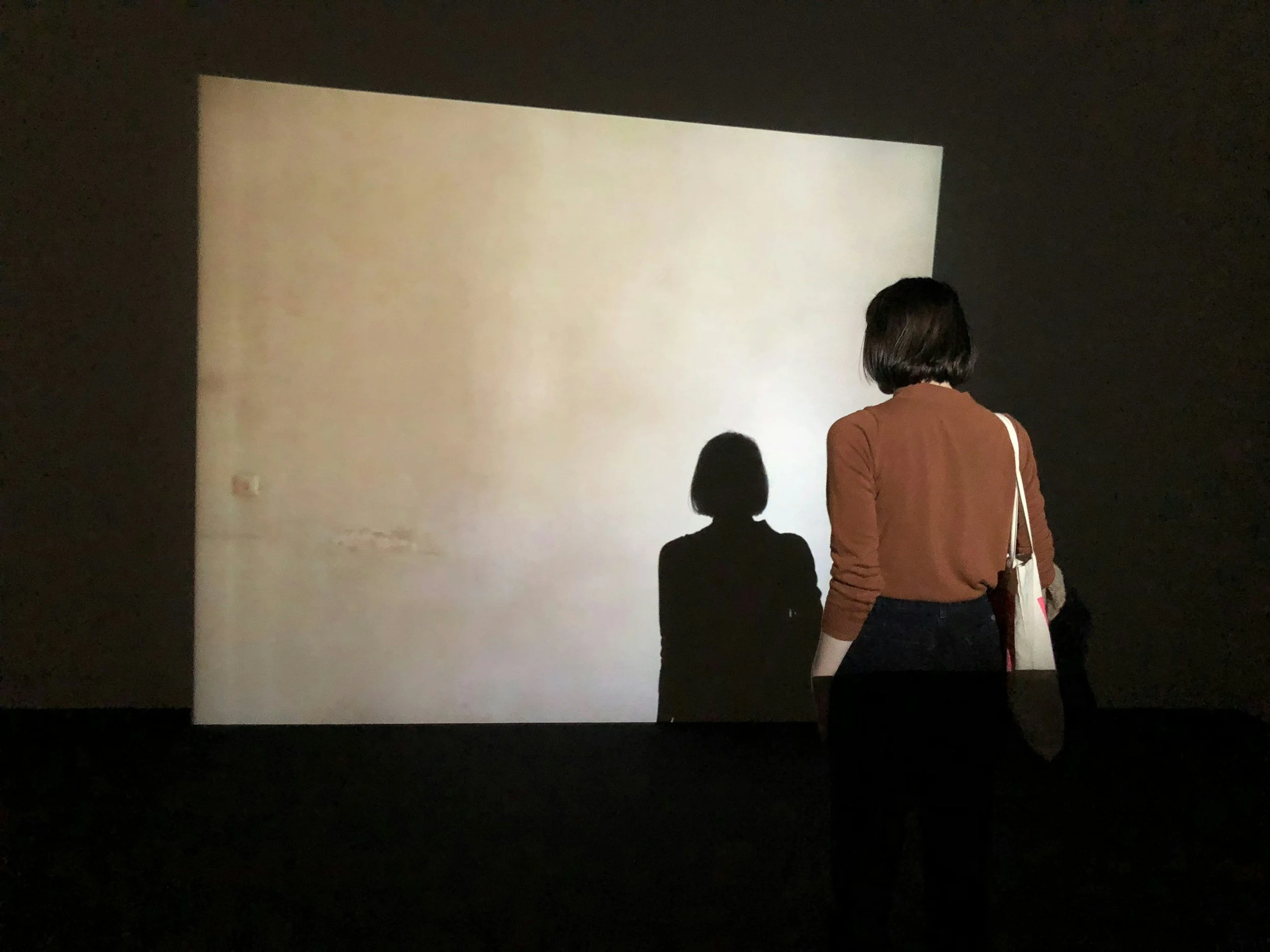
Image via Unsplash by Nicole Cagnina @nicole_c
The Necessity of Self-Awareness and Self-Examination
The analytic relationship is never a one-way process. Jung (1951/1982) emphasized the mutual, transformative nature of analytic work, writing, “The meeting of two personalities is like the contact of two chemical substances: if there is any reaction, both are transformed” (para. 163). He further asserted, “It is imperative that the doctor should not only observe the patient objectively, but should also let himself be affected by him. Unless both doctor and patient are transformed, there is no true therapeutic process” (para. 364). This recognition places a profound responsibility on the practitioner—not only to serve as a guide, but also to remain open to their own transformation, vulnerabilities, and unconscious dynamics. In this sense, ongoing self-awareness and self-examination are not optional, but essential ethical and clinical commitments.
Seen this way, projection, idealization, transference, and countertransference are not exotic clinical problems; they are intensified forms of ordinary human meaning-making processes that occur whenever attachment, fear, dependency, and hope are activated. The necessity for practitioners to continually examine themselves carries an ethical imperative: when the practitioner disowns their own woundedness, the clinical relationship can become organized around split roles, ‘practitioner’ versus ‘wounded,’ that invite projection and can ultimately harm the client (Jung, 1951/1982).
Jung’s (1946/1966; 1959/1969) insights here are foundational: analysis is not a detached technique applied by an expert to a passive client, but a relational field in which the practitioner participates as a subject, with their own unconscious, vulnerabilities, and blind spots. This is not merely a sentimental assertion, but an ethical and technical imperative. Depth-oriented clinical work inevitably activates the practitioner’s unfinished material; thus, the practitioner’s responsibility is not to be without wounds, but to maintain sufficient self-awareness, psychological resources, and supervision so that what emerges can be transformed into clinically useful information rather than enacted as implicit coercion (Jung, 1951/1982).
Within this frame, countertransference—the practitioner’s emotional and somatic responses to the client, often rooted in their own unconscious material (Sedgwick, 1994)—becomes central rather than accidental: it is clinically informative only when the practitioner reflects rather than enacts. Sedgwick’s Jungian account explicitly centers countertransference as a primary instrument and ties it to the analyst’s own woundedness and responsibility for processing what is stirred.
Recognizing and working consciously with these archetypal dynamics—projection, transference, countertransference, and idealization—not only safeguards clients from harm but also anchors the practitioner’s ethical commitment to ongoing self-examination. Yet, self-awareness alone is not enough; the practitioner must also remain vigilant to the deeper psychological risks that come with occupying the healer’s seat.
Projection, Enactment, and Withdrawal of Projections
According to Guggenbühl-Craig (2021), true healing occurs when clients connect with and receive help from their own “inner healer.” This requires practitioners to avoid placing all responsibility for healing on themselves, and instead foster a process in which clients gradually reclaim their own agency.
Depth psychology expects projection but also accountability. Early in treatment, the client may project the inner healer onto the practitioner, a necessary stage in many healing relationships. However, true healing requires the gradual withdrawal of projections, allowing the client to reclaim their own healing agency while the practitioner contacts their own wounding without discharging it into the relationship (Groesbeck, 1975; Hillman, 1997).
Jungian thought insists that the Healer is an archetype, not a personal possession (Hillman, 1997). Practitioners appear as Healer only to those who have yet to discover their own healing source; therefore, while early projections may be necessary, they must not be exploited or enshrined as personal identity.
When projections are not withdrawn or, worse, when the practitioner needs or encourages them, the client can become an unconscious container for the practitioner’s disowned fear, shame, rage, or unmet dependency needs. The client may feel confused, inferior, or chronically “not doing it right,” because the practitioner’s unacknowledged inner conflict has been imposed as a task: “carry my unresolved process for me” (Groesbeck, 1975).
The ethical task, then, is not defined by displays of power or authority, but by the practitioner’s disciplined self-reflection: “What is mine here? What is the client’s? What is archetypal? What is the field doing, and what are my responsibilities within it?” Ethical practice requires ongoing curiosity about what is being constellated and projected, and a commitment to differentiating what belongs to whom so the relationship remains a sanctuary for psyche, body, meaning, and trust. As Kirmayer (2003) pointed out, “the ethos of the wounded healer is not a call to omnipotence or moral purity but to a continual process of self-examination, humility, and ethical engagement with the suffering of others” (p. 275).
To support this process, practitioners can reflect after each session on:
What strong feelings or biases emerged for me?
Did my personal issues or history influence my responses?
Did I respect the client’s pace, or was I led by my own agenda?
What can I learn or adjust for next time to foster attunement and agency?
When archetypal intensity meets this kind of accountability and curiosity, it can deepen insight and restore inner agency, rather than slipping into enactment that leaves the client carrying what the practitioner has not yet recognized. In this way, “know thyself” becomes not just a moral injunction, but an ongoing clinical and ethical practice.
Conclusion
Ultimately, the healing relationship is not merely a site of intervention, but a field of mutual transformation, archetypal energies, and ethical responsibility. By recognizing the inevitability of projection, archetypal enactment, and the wounded wounder dynamic, practitioners are called not to perfection but to ongoing self-examination, humility, and disciplined reflection. True healing becomes possible not when the practitioner is unwounded, but when they acknowledge their own complexity, remain accountable for their impact, and support the client’s agency and differentiation. In this way, the ancient injunction to “know thyself” is renewed as a living practice, one that sustains the integrity, depth, and healing potential of the work.
About the Author
Dr. Kerstin Hecker, PhD, is a workplace bullying researcher, depth psychologist, Somatic Experiencing® Practitioner, and holistic counselor. Her work focuses on workplace bullying, covert aggression, abuse of power, relational harm, organizational dynamics, and the effects of chronic stress. She offers online counseling in English and German.
© 2026 Dr. Kerstin Hecker. All rights reserved. No part of this article may be reproduced, distributed, or used in any form without prior written permission from the author, except for brief quotations with proper citation.
References
Edinger, E. F. (1972). Ego and archetype: Individuation and the religious function of the psyche. Shambhala.
Groesbeck C. J. (1975). The archetypal image of the wounded healer.The Journal of Analytical Psychology,20(2), 122–145. https://doi.org/10.1111/j.1465-5922.1975.00122.x
Guggenbühl-Craig, A. (2021).Power in the helping professions(3rd rev. ed.). Spring Publications.
Hillman, J. (1975). Re-visioning psychology. Harper & Row.
Hillman, J. (1997). The soul’s code: In search of character and calling. Random House.
Jung, C. G. (1966). Fundamental questions of psychotherapy. (R. F. C. Hull, Trans.). In H. Read et al. (Eds.), The collected works of C. G. Jung: Vol. 16. The practice of psychotherapy (2nd ed., pp. 111–125). Princeton University Press. (Original work published 1951)
Jung, C. G. (1966). The psychology of the transference. In The practice of psychotherapy: Essays on the psychology of the transference and other subjects (R. F. C. Hull, Trans.; 2nd ed., Vol. 16, pp. 163–323). Princeton University Press. (Original work published 1946)
Jung, C. G. (1968). On the psychology of the trickster-figure. (R. F. C. Hull, Trans.). In H. Read et al. (Eds.), The collected works of C. G. Jung: Vol. 9, pt. 1. The archetypes and the collective unconscious (2nd ed., pp. 255–272). Princeton University Press. (Original work published 1954)
Jung, C. G. (1968). Psychological aspects of the mother archetype. (R. F. C. Hull, Trans.). In H. Read et al. (Eds.), The collected works of C. G. Jung: Vol. 9, pt. 1. The archetypes and the collective unconscious (2nd ed., pp. 73–110). Princeton University Press. (Original work published 1959)
Jung, C. G. (1969).The collected works of C. G. Jung: Vol. 5. Symbols of transformation(2nd ed.). (R. F. C. Hull, Trans.). Princeton University Press. (Original work published 1952)
Jung, C. G. (1982). Fundamental questions of psychotherapy. In The practice of psychotherapy: Essays on the psychology of the transference and other subjects (R. F. C. Hull, Trans.; 2nd ed., Vol. 16, pp. 125–144). Princeton University Press. (Original work published 1951)
Jung, C. G. (1989). Memories, dreams, reflections (A. Jaffé, Ed.; R. Winston & C. Winston, Trans.). Vintage. (Original work published 1961)
Kerényi, C. (1959). The wounded healer. In: The Gods of the Greeks (N. Cameron, Trans.). Thames & Hudson.
Kirmayer L. J. (2003). Asklepian dreams: the ethos of the wounded-healer in the clinical encounter.Transcultural psychiatry,40(2), 248–277. https://doi.org/10.1177/1363461503402007
Levine, P. A. (2010). In an unspoken voice: How the body releases trauma and restores goodness. North Atlantic Books.
Miller, G., & Baldwin, D. C. (2000). Implications of the wounded healer paradigm for the use of self in psychotherapy. Journal of Psychotherapy Integration, 10(4), 363–379.
Ogden, P., Minton, K., & Pain, C. (2006). Trauma and the body: A sensorimotor approach to psychotherapy. W. W. Norton.
Plato. (1992). Republic (G. M. A. Grube, Trans.; C. D. C. Reeve, Rev.). Hackett Publishing. (Original work published ca. 380 BCE)
Sedgwick, D. (1994).The wounded healer: Countertransference from a Jungian perspective. Routledge.
van der Kolk, B. (2014). The body keeps the score: Brain, mind, and body in the healing of trauma. Viking.